
Why JazzUp Is the Must‑Have AI Tool for Modern E‑Commerce Brands
In today’s hyper‑competitive online marketplace, raw transaction data alone is no longer enough to drive growth. Retailers need intelligent, real‑time insights that can turn everyday shopping behavior into actionable strategies—whether that means serving the right product at the right moment, allocating ad spend with surgical precision, or preventing stock‑outs before they happen. JazzUp AI delivers exactly that blend of sophisticated machine‑learning power and user‑friendly design, positioning it as the go‑to analytics engine for merchants who refuse to settle for guesswork.
Built from the ground up for Shopify, Wix, Squarespace, and WooCommerce stores, JazzUp seamlessly ingests orders, customer profiles, and product catalogs, then transforms this data into dynamic segments, predictive forecasts, and profit‑focused dashboards. The platform’s commitment to security, GDPR compliance, and cloud scalability ensures that businesses of any size— from boutique boutiques to enterprise‑level catalogues—can trust their most sensitive data to a reliable, always‑up‑to‑date service. Over the next few minutes, you’ll discover how JazzUp’s core capabilities, effortless installation, and transparent pricing combine to give online sellers a genuine competitive edge, all while keeping the learning curve shallow enough for non‑technical team members to start seeing value within hours.
Overview of JazzUp AI – Features, Benefits, and Core Capabilities
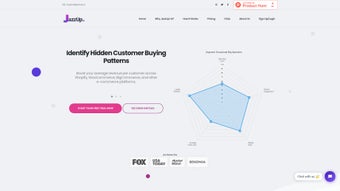
JazzUp AI is a next‑generation, machine‑learning platform designed specifically for e‑commerce operators who demand deeper insight into their customers and products. By connecting directly to popular storefronts such as Shopify, Wix, Squarespace, and WooCommerce, JazzUp pulls transaction data, browsing patterns, and demographic signals into a single, secure dashboard. The heart of the service is a trained AI model that automatically segments shoppers based on purchasing frequency, basket size, product affinity, and lifecycle stage.
These segments evolve as new data streams in, enabling merchants to launch hyper‑targeted campaigns, personalize product recommendations, and allocate ad spend with confidence. In addition to segmentation, JazzUp delivers comprehensive product analytics that reveal which SKUs drive the highest profit margins, which categories are trending, and where inventory risks may arise. Predictive analytics modules forecast demand spikes and churn probability, giving businesses a strategic edge in planning promotions and stock replenishment.
While currently offered as a subscription‑based SaaS solution, the roadmap promises seamless CRM integrations and competitor‑benchmarking tools, positioning JazzUp as a long‑term growth engine for any e‑commerce operation.
Core Features that Set JazzUp Apart
- Advanced Customer Segmentation: AI‑driven clusters based on purchase frequency, average order value, product preferences, and churn risk.
- Customer Value Analytics: Lifetime value (LTV) calculations and predictive scoring to prioritize high‑margin shoppers.
- Comprehensive Product Analytics: Real‑time insights into best‑selling items, margin contributors, and emerging trends.
- Predictive Demand Forecasting: Seasonality models that anticipate sales spikes up to 30 days in advance.
- Actionable Reporting Suite: Customizable dashboards, scheduled email reports, and export options for Excel or CSV.
- Seamless Storefront Integration: One‑click connectors for Shopify, Wix, Squarespace, and WooCommerce with automatic data sync.
- Secure Cloud Architecture: End‑to‑end encryption, GDPR‑compliant data handling, and role‑based access controls.
- Future‑Ready Roadmap: Planned CRM sync (HubSpot, Salesforce) and competitor analysis modules slated for Q4 2025.
Each of these features is engineered to eliminate the time‑consuming manual data wrangling that traditionally plagues e‑commerce teams. For example, the Customer Value Analytics module not only calculates LTV but also suggests optimal discount tiers for each segment, helping you retain high‑value shoppers without eroding margins. The Predictive Demand Forecasting engine leverages historical sales, promotional calendars, and external factors such as holidays to generate confidence‑interval forecasts that can be fed directly into inventory management systems. Early adopters report conversion‑rate lifts of 20‑30 % after deploying AI‑driven product recommendations derived from JazzUp’s segmentation engine. By delivering real‑time data, robust security, and a clear product roadmap, JazzUp offers a compelling value proposition for growth‑focused online retailers seeking to turn raw numbers into strategic advantage.
Installation, Compatibility, and Getting Started with JazzUp
Setting up JazzUp is intentionally straightforward, allowing store owners to start extracting value within minutes rather than hours. Begin by navigating to the official JazzUp website and selecting the “Start Free Trial” button. After entering your business email and creating a secure password, you’ll be guided through a brief onboarding wizard. The wizard asks you to choose your e‑commerce platform—Shopify, Wix, Squarespace, or WooCommerce—and then generates an API key that you paste into the JazzUp connector module within your store’s admin panel. This secure token enables a read‑only data feed, ensuring that JazzUp can pull orders, customer profiles, and product catalogs without ever modifying your live store.
Compatibility (itemprop="operatingSystem"): JazzUp is a cloud‑based SaaS application, meaning it runs on any modern web browser (Chrome, Firefox, Safari, Edge) across Windows 10/11, macOS, Linux, as well as mobile browsers on Android 10+ and iOS 13+. No local installation is required, and the service automatically scales with your data volume, making it suitable for both boutique shops and enterprise‑level catalogs with tens of thousands of SKUs.
Once the connector is active, JazzUp begins its initial data sync, which typically completes within 10‑15 minutes for small to medium stores. After the sync, you’ll be directed to the main dashboard where the AI model starts generating segments. The UI features a “Quick‑Start” tutorial that walks you through creating your first customer segment, assigning a label (e.g., “High‑Value Repeat Buyers”), and exporting that list to your email marketing tool. For power users, the platform offers a “Custom Query Builder” that allows you to filter segments by multiple dimensions—such as average order value > $150 and last purchase within 30 days—providing laser‑focused target groups.
Ongoing usage is supported by automated daily refreshes, ensuring that new orders and customer actions are reflected in near real‑time. JazzUp also offers a native alerts system: you can set threshold‑based notifications (e.g., “Product X inventory projected to run out in 5 days”) that arrive via email or Slack integration. The combination of effortless installation, broad OS compatibility, and intuitive usage flows means that even non‑technical store owners can harness sophisticated AI analytics without hiring a data science team.
Pros, Cons, and Frequently Asked Questions About JazzUp
Pros
- Deep, AI‑driven customer segmentation that updates automatically.
- Actionable product analytics and demand forecasting.
- One‑click integrations with the four major e‑commerce platforms.
- Secure, GDPR‑compliant cloud architecture.
- Scalable for small boutiques and large enterprises alike.
- Custom query builder for highly granular segment creation.
- 24/7 chat support and extensive knowledge base.
Cons
- Subscription pricing may be a barrier for very early‑stage startups.
- Advanced features like CRM sync are slated for future releases, not available today.
- Requires internet connectivity; offline access is not supported.
- Initial data sync can take up to 15 minutes for larger catalogs.
FAQ (itemscope itemtype="https://schema.org/FAQPage")
Is JazzUp compatible with my existing Shopify store?
Yes. JazzUp provides a native Shopify connector that uses an API key to sync orders, customers, and product data securely. The integration is completed in a few clicks from the JazzUp onboarding wizard.
How does JazzUp protect my customer data?
All data transfers are encrypted with TLS 1.3, and data at rest is stored using AES‑256 encryption. JazzUp is fully GDPR‑compliant and offers role‑based access controls to restrict who can view sensitive information.
Can I export segment lists to my email marketing platform?
Absolutely. Segment lists can be exported as CSV files or sent directly to popular email services like Mailchimp, Klaviyo, and Constant Contact via built‑in integrations.
What kind of support does JazzUp provide?
JazzUp offers 24/7 chat support, a comprehensive knowledge base, and monthly webinars that cover advanced use‑cases and new feature rollouts.
Is there a free trial or a free tier?
New users can start with a 14‑day free trial that includes full access to all core features. After the trial, plans begin at $79 per month, with volume discounts for larger catalogs.
Conclusion & Call to Action
JazzUp AI stands out as a robust, future‑ready analytics engine that transforms raw transaction data into strategic growth opportunities. Its blend of automatic segmentation, predictive product insights, and secure cloud delivery equips e‑commerce operators with the tools needed to outpace competitors and delight customers with personalized experiences. While the subscription cost reflects the high‑value AI infrastructure behind the platform, the ROI—evidenced by higher conversion rates, better inventory planning, and more efficient marketing spend—justifies the investment for serious online retailers. If you’re ready to turn data into a competitive advantage, click the button below to start your free trial and see how JazzUp can revolutionize your e‑commerce strategy.
JazzUp delivers a sophisticated AI toolkit that is surprisingly easy to adopt. The segmentation accuracy and predictive analytics have noticeably improved our campaign ROI, making it a worthwhile addition to any online store’s tech stack.